Courses
Technical Diving Courses in Mallorca
A step-by-step progression from foundational skills through to trimix and closed-circuit rebreather. Academics are kept interactive and tied to real diving scenarios; in-water sessions move from confined-water skills to simulated problem dives before you rely on them for real.
01
Technical Diving Foundations
The skills every technical course is built on.
Propulsion and trim, valve management drills, doubles or sidemount configuration, and the gas-planning discipline that underpins everything that follows. This is where a diver becomes comfortable enough in the water that the equipment stops getting in the way.
- Trim and propulsion
- Valve drills and failure scenarios
- Doubles / sidemount configuration
- Gas management rules
02
Decompression Procedures
Your first staged-decompression dives.
Planning and running dives with a mandatory decompression obligation: gas switches, DSMB deployment, and — critically — what to do when a problem shows up during the ascent rather than before it. Confined-water sessions and simulated-deco scenario dives build the skill before it's needed for real.
- Single deco gas
- Gas switches
- DSMB deployment
- Managing non-fixable problems on ascent
03
Advanced Trimix
Greater depths, multiple deco gases.
Extending range with hypoxic trimix, managing two or more decompression gases, and the added planning and contingency work that comes with deeper profiles.
- Hypoxic trimix
- Multiple deco gases
- Extended decompression obligations
- Deeper-water contingency planning
04
Closed-Circuit Rebreather (CCR)
Unit-specific rebreather training.
Oxygen monitoring, bailout procedures, and the specific handling of a closed-circuit rebreather unit. This is typically built on an open-circuit technical foundation.
- Unit-specific handling
- Oxygen cell monitoring
- Bailout procedures
- CCR-specific failure drills
How the diving works
Confined water, then simulated deco dives, then the real thing
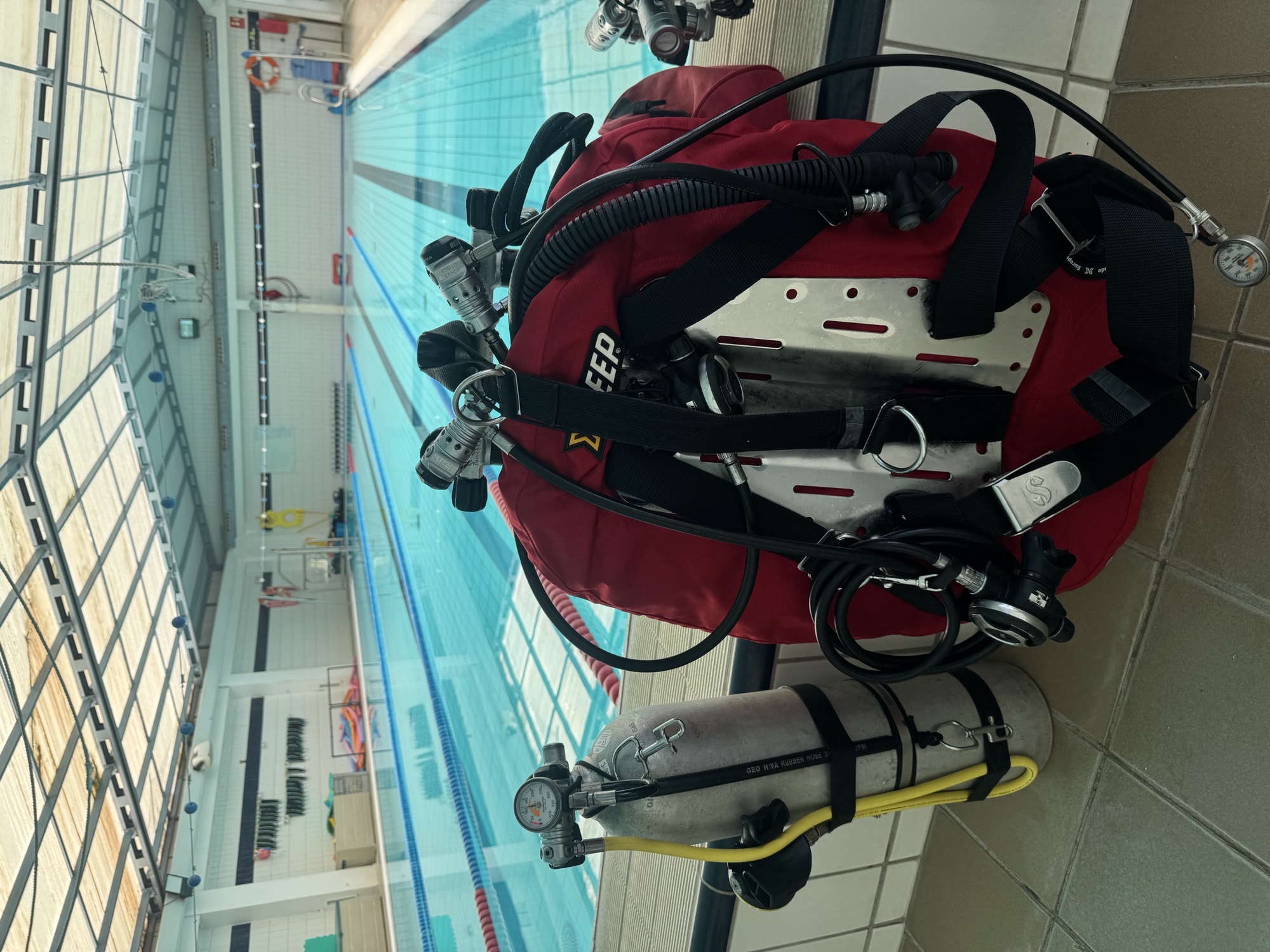
Every course includes confined-water sessions to introduce and review skills, followed by simulated scenario dives in shallow water. Problems given during these dives are either fixable — the dive continues — or non-fixable, meaning the ascent has to be managed with the problem still in place.
This is where the real learning happens: managing a problem under a simulated ascent, before the depth and decompression obligation are real.
FAQ
Frequently asked questions
Which certifying agency do you teach under?
This depends on the course and your background — Didac will confirm the relevant agency and exact course name when you get in touch, based on what fits your goals and existing certifications.
How long does each course take?
It varies with the course level and your existing experience. Academic sessions, confined-water skills and open-water dives are scheduled around your certification, availability and how quickly skills are progressing — not a fixed calendar.
Do I need my own equipment?
Message Didac with your current setup and certification level — equipment needs are discussed and confirmed before the course.
Not sure where to start?
Send Didac your current certification and dive experience on WhatsApp, and he’ll suggest the right starting point.
Get started
Talk through your training path
A short message is enough to get a clear answer on where to begin.
Message Didac